
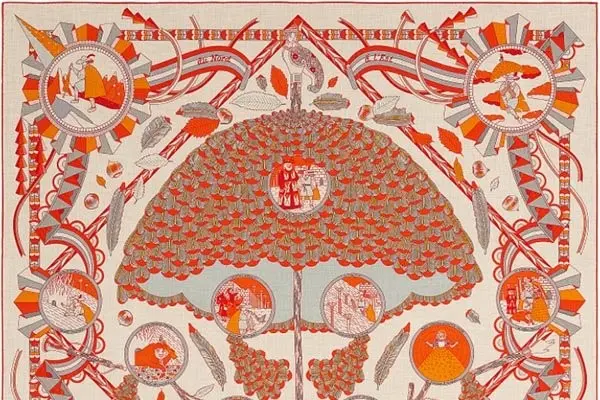
Artist scarves turn paintings, illustrations, digital artwork, patterns and visual stories into wearable silk products. The strongest ideas usually keep the artwork recognizable while adapting it for scarf size, fabric, print layout, color review and packaging.
Before an artist scarf becomes a sample, the artwork needs more than a good image. It needs a layout plan, file preparation, color references, label direction and a clear packaging idea.
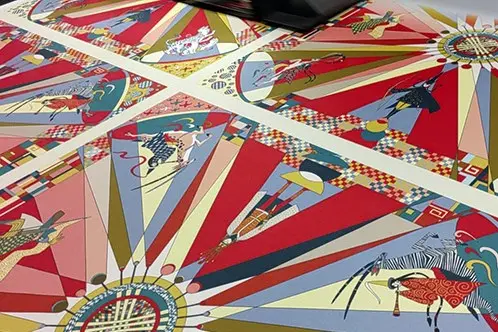
Artist Scarf Formats and Design Directions
| Direction | How it can work | Planning note |
|---|---|---|
| Full artwork square scarf | A painting or illustration fills the scarf format | Check cropping, border balance and actual scarf size |
| Detail crop scarf | One strong section of the artwork becomes the scarf focus | Choose the crop intentionally, not by accident |
| Repeat motif scarf | Smaller artwork elements become a repeat pattern | Check repeat scale and spacing before sampling |
| Border composition | A central artwork is framed by a border or signature detail | Leave edge finish allowance and corner space |
| Limited edition scarf | The scarf supports a numbered or collection-based release | Plan labels, hang tags, insert cards and packaging early |
| Gallery shop scarf | The scarf is designed for retail display and gifting | Review fold method, box size and story card copy |
The format should be chosen around the artwork, not after the artwork has already been forced into a scarf template.
Prepare Art Files for Silk Printing
Art files should be reviewed before sampling so the scarf layout is clear and production-ready. A beautiful artwork file can still need adjustment when it becomes a silk scarf.
Prepare these details:
- Final scarf size and shape
- Artwork file at suitable resolution or vector quality
- Crop direction or full-artwork layout
- Border, corner or signature placement
- Pantone, printed proof or physical color references
- Fabric and momme direction
- Edge finish
- Label, hang tag and packaging plan
- Quantity and number of designs or colorways
If the artwork includes someone else's image, text, mark or collaborative work, confirm permission before production layout starts.
Layout Ideas for Artists and Galleries
| Layout idea | Best fit | What to check |
|---|---|---|
| Full artwork square | Paintings, posters, illustrations and bold visual pieces | Image crop, border space and flat display |
| Center artwork with border | Gallery scarves, gift scarves and artist editions | Border width, corner detail and folded view |
| Repeat from artwork details | Motifs, line drawings, symbols or texture studies | Repeat tile, motif scale and direction |
| Split composition | Abstract artwork or multiple visual panels | Balance, fold direction and final scarf size |
| Signature detail | Artist mark, title detail or small text element | Readability, placement and permission |
Review the design flat and folded. An artist scarf should work as a visual object and as something a buyer can wear or gift.
Color Sampling and Fabric Choice
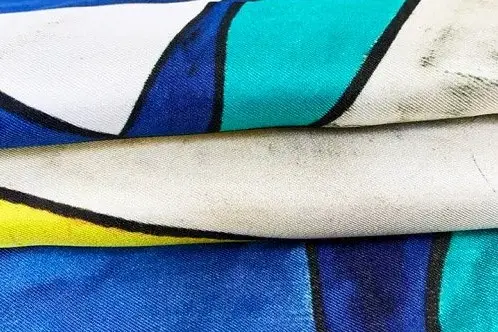
Color can change when artwork moves from a screen or paper proof onto silk. Fabric weave, weight, print method, finishing and lighting can all affect how the final scarf appears.
Artist scarf samples should review:
- Color relationship to the original artwork or approved proof
- Fine line clarity
- Dark and light area balance
- Border and crop placement
- Fabric hand feel and drape
- Edge finish appearance
- Label and packaging presentation
Silk twill, charmeuse, satin silk, habotai and crepe de Chine can all be considered depending on the artwork style and product direction.
Limited Edition and Gallery Shop Planning
Artist scarves can work as limited editions, gallery shop products, exhibition gifts, artist merchandise or collector gifts. The product feels stronger when the scarf, label and packaging all support the artwork story.
| Element | Planning focus |
|---|---|
| Woven label | Artist name, brand name or simple private-label direction |
| Hang tag | Artwork title, care note, collection note or retail information |
| Insert card | Short artwork story, edition note or gift message |
| Silk pouch | Soft presentation and coordinated product set |
| Paper box or gift box | Retail display, storage and gift presentation |
| Ribbon packaging | Collection color, event color or gallery gift direction |
Any edition note, artwork title or artist credit should be approved before labels or inserts are printed.
Common Mistakes to Avoid
Avoid these mistakes when developing artist scarves:
- Cropping artwork without checking the final scarf size
- Sending only a low-resolution preview file
- Ignoring border and edge finish allowance
- Reviewing color only on a screen
- Making small text or signatures too small to read
- Choosing packaging after the scarf sample is already approved
- Starting production layout before artwork permission is clear
A stronger process is to review artwork, layout, color references, fabric and packaging together before the first sample.
Frequently Asked Questions
Paintings, illustrations, digital artwork, repeats, abstract pieces, borders and signature motifs can all work when prepared at the right size and file quality.
Square layouts are common because they can show artwork clearly, but long scarves can work well for repeats, flowing compositions, borders or vertical artwork.
Yes. Limited edition scarves can use planned labels, hang tags, insert cards, packaging notes or numbering when those details are approved before production.
Color sampling helps compare artwork colors on silk because fabric, print method, finishing and lighting can change the final appearance.
Small text or signatures can be discussed, but readability should be checked at actual scarf size and reviewed on a sample.
Send artwork files, scarf size, color references, fabric direction, edge finish, quantity, edition or label needs and packaging plan.
Related Resources
Send artwork files, scarf size, color references, fabric direction, edge finish, quantity, edition or label needs and packaging plan. ElaraSilk can review the artist scarf layout before sampling.
Send Project Details