

The best scarf material depends on the scarf's purpose. A museum scarf, a corporate gift scarf, a retail fashion scarf and a lightweight seasonal scarf may need different fabric choices, even if all of them use silk.
For custom scarf projects, buyers usually compare drape, print detail, surface sheen, opacity, edge finish, packaging, target audience and budget before choosing. Silk twill, silk satin, habotai, chiffon and crepe de chine can each make sense in different situations.
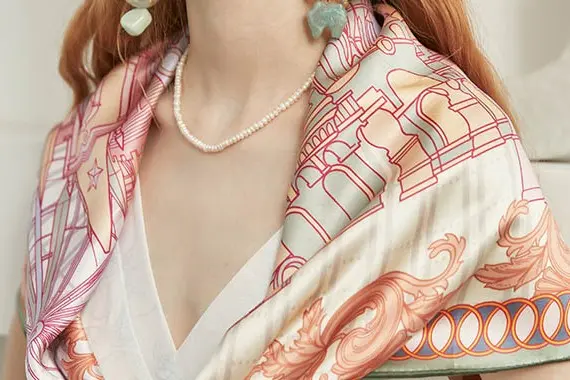
Quick Answer: Choose Scarf Material by Use
| Scarf goal | Material direction to compare |
|---|---|
| Premium printed scarf | Silk twill or silk satin |
| Art or museum scarf | Silk twill, silk satin or printed silk fabric sample |
| Lightweight fashion scarf | Habotai, chiffon or crepe de chine |
| Corporate gift scarf | Twill or satin with careful packaging planning |
| Sheer scarf | Silk chiffon or another sheer fabric direction |
| Budget-sensitive scarf | Compare weave, momme, size and packaging together |
There is no single best scarf material for every project. The best choice is the fabric that supports the scarf's size, artwork, use, price position and presentation.
Silk Twill for Structured Printed Scarves
Silk twill is often chosen for scarves that need more body, visible texture and a strong presentation for printed artwork. It can work well for square scarves, brand scarves, corporate gifts and art-led designs.
Silk twill may fit when the project needs:
- More structure than very light silk fabrics
- Good folded presentation
- Borders, central artwork or brand graphics
- A refined texture instead of a plain glossy surface
- A premium scarf position
Sample review should check print clarity, color direction, drape and edge finish before bulk production.
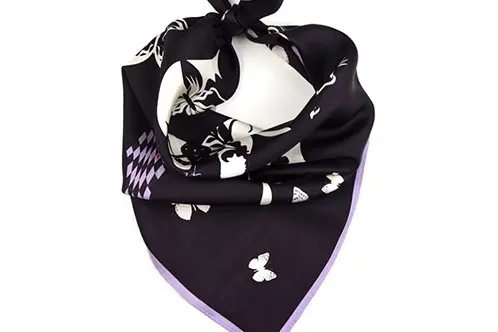
Silk Satin for Smooth Sheen
Silk satin can be useful when a scarf needs a smooth surface, visible sheen and fluid drape. It may suit fashion scarves, gift scarves and designs where color and surface shine are important.
Silk satin may fit when the project needs:
- Smooth hand feel
- Brighter surface effect
- Fluid movement
- Soft color presentation
- A polished retail look
Because sheen affects color perception, printed samples or color references are important.
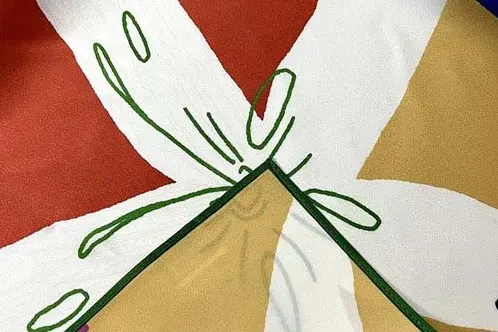
Habotai, Chiffon and Crepe Directions
Not every scarf needs twill or satin. Some projects need a lighter, softer or more transparent direction.
| Fabric direction | When to consider it |
|---|---|
| Habotai | Lightweight scarves, simple drape and accessible silk direction |
| Chiffon | Sheer, flowing scarves where transparency is part of the design |
| Crepe de Chine | Soft drape with subtle texture for fashion or printed scarves |
Each option should be tested by scarf size, artwork, opacity and edge finish.
Match Material to Buyer Type
| Buyer type | Material decision focus |
|---|---|
| Museum shops | Art reproduction, color review, scarf size, packaging and rights clearance |
| Corporate gift teams | Brand color, logo placement, gift box, budget and presentation |
| Fashion brands | Seasonal direction, drape, fabric weight, repeat orders and label plan |
| Retailers | Product family, hang tag, packaging, price position and repeatability |
| Designers and artists | Artwork translation, sample approval, border layout and edition planning |
The buyer type affects more than fabric. It also affects label, packaging, color approval and sample review.
Printing and Edge Finish
Scarf material changes how artwork appears. Satin may show stronger sheen. Twill may add texture. Chiffon may make color look softer because it is sheer. Crepe may affect fine lines through surface texture.
Before final artwork approval, check:
- Scarf size and layout
- Border width and corner details
- Fabric direction and momme or weight
- Print method discussion
- Pantone or physical color references
- Edge finish such as hand-rolled hem
- Label and packaging plan
Edge finish should be chosen with fabric weight and scarf style in mind.
Common Mistakes to Avoid
Avoid choosing scarf material only by name. A fabric that looks good in a swatch may behave differently at full scarf size.
Common mistakes include:
- Choosing fabric before confirming scarf size
- Ignoring how the scarf will fold, tie or hang
- Using detailed borders without sample review
- Comparing color only on a screen
- Forgetting edge finish and packaging
- Presenting a blend as 100% silk
Samples help buyers compare drape, sheen, opacity, print clarity and edge finish before production.
Frequently Asked Questions
There is no single best material for every scarf. Silk twill, silk satin, habotai, chiffon and crepe de chine can all fit different scarf goals.
Yes. Silk twill is often useful for premium printed scarves because it has structure, texture and strong presentation for borders or artwork.
Yes. Silk satin can work well when the scarf needs a smooth surface, visible sheen and fluid drape.
Habotai, chiffon or crepe de chine may be considered for lighter scarf directions depending on drape, transparency and artwork.
It should be chosen early because fabric texture, weight, opacity and sheen affect color, border layout, print clarity and edge finish.
Send scarf size, artwork, target audience, fabric direction, color references, edge finish, quantity, label needs and packaging plan.
Related Resources
Send your scarf size, artwork, target audience, fabric direction, color references, edge finish, quantity, label needs and packaging plan. ElaraSilk can help compare scarf material options before sampling.
Send Project Details