
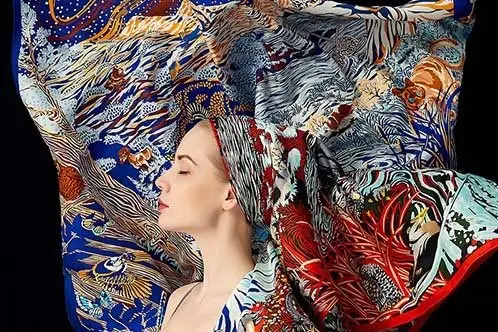
Choosing scarf fabric is a production decision, not only a style preference. The right fabric depends on scarf type, finished size, artwork, drape, print detail, edge finish, buyer market, packaging and budget.
For custom scarf projects, fabric should be compared before final artwork and bulk production. A design that looks strong on silk twill may feel different on satin, habotai, chiffon or crepe de chine.
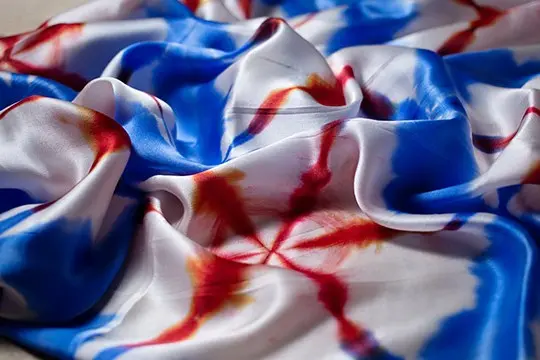
Start With the Scarf Brief
Before choosing fabric, define the scarf brief clearly.
| Decision | What to clarify |
|---|---|
| Scarf type | Square, long, bandana, neck scarf, head scarf or shawl-style |
| Finished size | Small, medium, large, long or custom dimensions |
| Artwork | Border, repeat pattern, logo, illustration or color block |
| Buyer market | Fashion, museum gift, corporate gift, retail or artist edition |
| Product position | Premium, lightweight, seasonal, gift-ready or budget-sensitive |
| Packaging | Pouch, box, hang tag, care label or ribbon presentation |
Fabric choice becomes easier once the scarf brief is specific.
Compare Common Scarf Fabric Directions
| Fabric direction | When to compare it |
|---|---|
| Silk twill | Structure, texture, folded presentation and premium printed scarves |
| Silk satin | Smooth sheen, fluid drape and polished color appearance |
| Habotai | Lightweight silk direction and softer scarf positioning |
| Chiffon | Sheer, flowing scarf effect and delicate styling |
| Crepe de Chine | Soft drape with subtle texture for fashion or printed scarves |
The best fabric is the one that supports the target use, not the one with the most premium name.
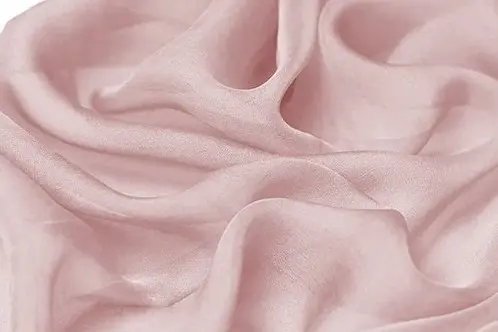
Match Fabric to Artwork
Artwork and fabric should be reviewed together. Fine lines, large color blocks, borders, repeats and logos may all behave differently depending on the surface and drape.
Review these points:
- Border clarity
- Logo visibility
- Repeat scale
- Color reference
- Surface sheen
- Texture
- Transparency or opacity
- Folded appearance
Pantone or physical color references help communication, but the sample should be checked on the chosen fabric.
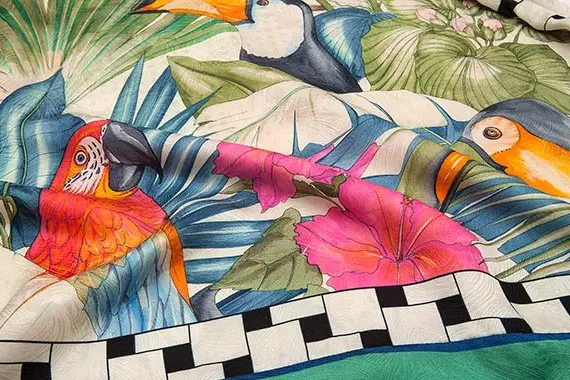
Match Fabric to Edge Finish
Edge finish affects how a scarf feels and how artwork sits near the border. A hand-rolled hem, machine hem or other finish should be considered before artwork is final.
| Fabric and finish question | Why it matters |
|---|---|
| Is the fabric light or structured? | Edge finish can change drape and weight at the border |
| Is there a border design? | Artwork needs enough space for the hem |
| Is the scarf small or large? | Edge proportion affects the finished look |
| Is the scarf gift-packed? | Folded presentation should protect the edge |
Fabric, artwork and edge finish should be reviewed as one set.
Match Fabric to Buyer Type
| Buyer type | Fabric selection focus |
|---|---|
| Museum shops | Artwork detail, color review, premium hand feel and gift packaging |
| Fashion brands | Drape, collection direction, seasonal palette and repeat orders |
| Corporate gift teams | Brand color, logo placement, presentation and consistent quality |
| Retailers | Price point, label, packaging and repeatable product family |
| Artists | Artwork scale, sample approval and limited-edition presentation |
The same silk fabric can serve different buyer goals when size, artwork and packaging are adjusted.
Use Samples Before Final Production
Swatches and printed samples help compare real fabric behavior. They can show whether the chosen fabric works for drape, print clarity, opacity, color, edge finish and packaging.
Before sampling, prepare:
- Scarf type and finished size
- Artwork file or design direction
- Fabric options to compare
- Color references
- Edge finish preference
- Quantity
- Label and packaging needs
This makes sample review faster and more useful.
Frequently Asked Questions
Consider scarf type, size, drape, opacity, print design, edge finish, care, budget, target customer and packaging.
Silk twill and silk satin are common premium options, depending on whether structure or smooth sheen is more important.
Yes. Lightweight silk such as habotai or chiffon can work for certain scarf styles, but samples should confirm drape and transparency.
Yes. Texture, sheen, opacity and weave affect color, print clarity and final hand feel.
Usually yes. Fabric affects border spacing, color, repeat scale, edge finish and sample review.
Send scarf type, finished size, artwork, fabric preferences, color references, edge finish, quantity, label needs and packaging plan.
Related Resources
Send your scarf type, finished size, artwork, fabric preferences, color references, edge finish, quantity, label needs and packaging plan. ElaraSilk can help compare scarf fabric options before sampling.
Send Project Details